AI Agents for Travel in 2026: How Agentic Booking Is Changing Everything
June 26, 2026


What happens when an AI agent needs a tool it has never seen before? Until recently, the answer was simple: it could not use it. Every tool connection had to be hardwired by a developer before an agent could access it. On June 17, 2026, that constraint got a serious challenge.
Google, Microsoft, Hugging Face, Amazon, Cisco, GitHub, NVIDIA, Salesforce, and Snowflake jointly released the Agentic Resource Discovery (ARD) specification: an open standard that lets AI agents search for, verify, and connect to tools, APIs, MCP servers, and other agents at runtime, without pre-configured integrations. Agentic resource discovery 2026 is the foundational infrastructure layer the multi-agent web has been missing, and understanding it is essential for anyone building or deploying AI agents this year.
With Gartner projecting AI agent software spending at $206.5 billion in 2026 (up 139% from 2025), the scale of what is being built makes this standard consequential at a level few specifications reach this quickly.
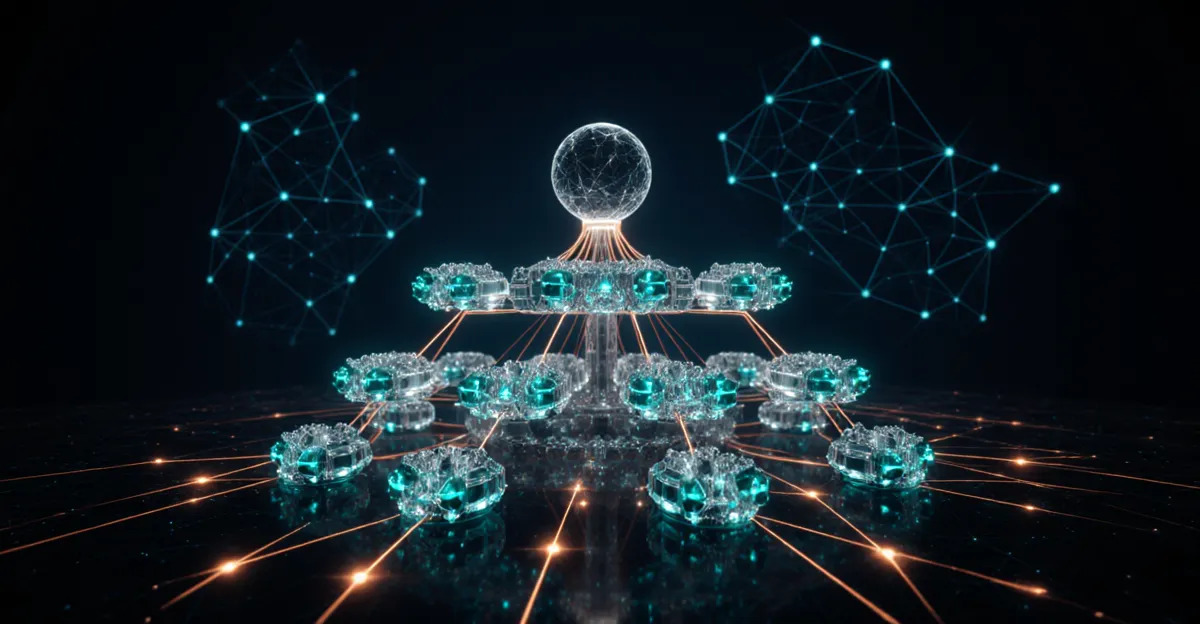
The open AI agent standard solving discovery works like this: instead of a developer manually writing every tool connection into an agent, organizations publish a machine-readable file called ai-catalog.json at a well-known URL path on their domain. Think of it as a robots.txt for agentic capabilities. This catalog lists every capability the organization exposes to agents: MCP servers, A2A-compatible agents, OpenAPI tools, and nested catalogs pointing to more.
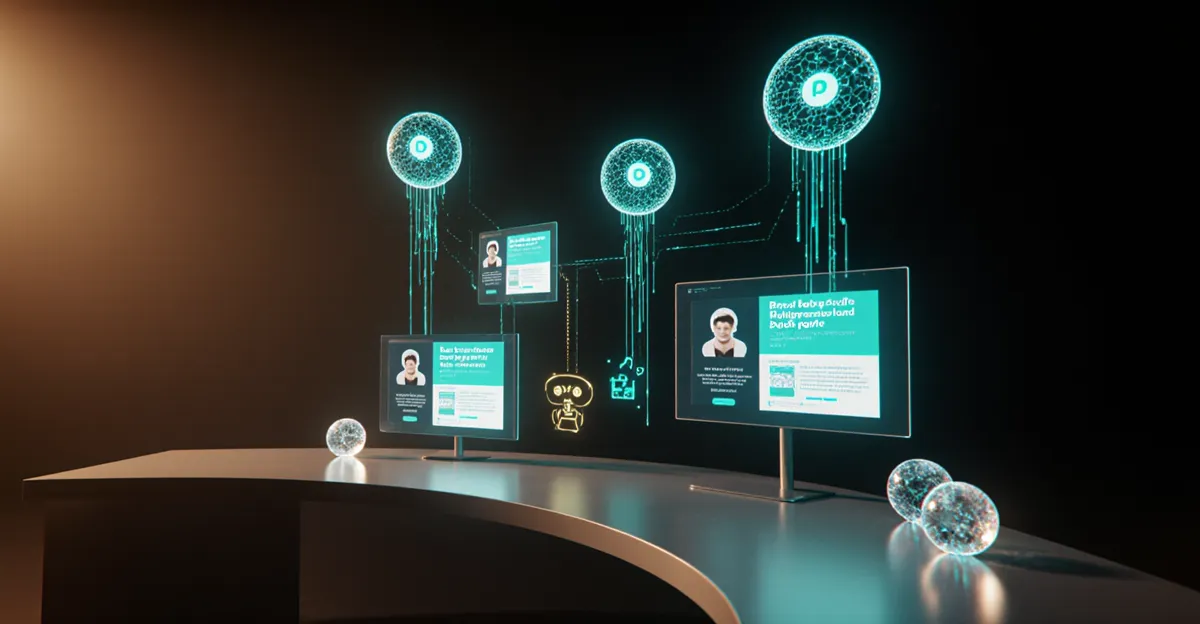
Independent registries crawl these catalogs and build searchable indexes. An AI agent can then query a registry by intent rather than by a specific tool name. Instead of a hardcoded API call, the agent searches for “a tool that can process supplier invoices from ERP systems,” and the registry returns ranked, verified results.
ARD is explicitly not a replacement for MCP or the Agent-to-Agent (A2A) protocol. It sits one layer earlier in the workflow: it helps an agent find the right resource, which is then called through its own protocol. ARD is the index; MCP and A2A are the languages. The specification was released under the Apache 2.0 license and is governed by the Linux Foundation, signals of serious long-term institutional backing.
How AI agents discover tools using ARD follows a clean publish-crawl-search-verify-connect pipeline, and each step matters.
Publish: A company hosts an ai-catalog.json at a standard path on their domain, listing all capabilities with metadata including version, authentication requirements, and category tags. Any organization can do this, and ARD uses a federated model where registries cross-reference each other with no central chokepoint.
Crawl: Registries periodically scan known domains for ai-catalog.json manifests and index the contents. Over time, this builds a distributed directory of available agentic capabilities across the web.
Search: An agent queries a registry by intent. The registry applies ranking logic based on capability tags, reputation scores, and query relevance, returning a shortlist of candidates.
Verify: Before connecting, the agent validates the publisher using signature algorithms and revocation URLs built into the manifest. This step is critical: without verification, a compromised registry entry could redirect an agent to a malicious service.
Connect: The agent establishes a connection to the verified resource through its native protocol, whether that is MCP, A2A, or a plain REST API. ARD handles discovery and verification; everything from connection onward is the resource\s own interface.
The security model is a deliberate inclusion in the draft, though early testing found limitations: as of June 18, 2026, none of the eleven named working-group members had yet published a discoverable ai-catalog.json on their own live domains. The gap between specification and deployment is real. For more on governing agentic workflows with proper access controls, see AI agent governance strategies for enterprises.
For technical and business leaders planning AI agent deployments in 2026, agentic resource discovery creates a meaningful shift when it reaches broad adoption.
Today, integrating a new tool into an agent workflow requires developer time: writing the connector, testing the API, redeploying the agent. ARD\s mature-state promise is composability: an agent discovers the best available capability at execution time rather than being limited to what was pre-configured months earlier.
Three practical implications stand out. First, enterprises can publish internal tools to private ARD registries, making capabilities available across internal agent networks without creating hardcoded dependencies between teams. Second, third-party tool vendors gain a new distribution channel: publishing an ai-catalog.json makes a tool discoverable to any ARD-compatible agent searching for its capability category. Third, agentic pipelines become more resilient: if a tool becomes unavailable, an ARD-capable agent can search for alternatives rather than failing entirely.
For teams evaluating agent frameworks, ARD compatibility is worth adding to the checklist. The best AI agent frameworks of 2026 are converging on interoperability as a key differentiator, and ARD is a key piece of that puzzle. Tool vendors should consider publishing ai-catalog.json manifests now: early movers will benefit as registry crawlers begin indexing and the standard gains adoption. The security dimension connects directly to identity: the AI agent identity management challenge and ARD\s verification step are tightly linked, as agents need verified identities to be trusted by tools.
One notable feature of the ARD coalition is who is missing: Anthropic and OpenAI. Both have been active in adjacent standards work. Anthropic created the Model Context Protocol (MCP), now integrated into ChatGPT, Gemini, Cursor, and Visual Studio Code with over 10,000 MCP servers published. OpenAI participated in the Agent-to-Agent (A2A) working group.
Their ARD absence appears to reflect strategic calculus. Google and Microsoft operate large cloud infrastructure businesses that benefit from an open discovery layer, because commoditizing discovery means more agents running on their infrastructure. Anthropic and OpenAI have stronger incentives to keep the discovery layer inside their own platforms, where they can surface preferred tool integrations and maintain ecosystem control. Google and Microsoft standardized what they could afford to make free, and kept proprietary what matters most to their revenue.
For businesses, this fragmentation means planning for at least two parallel worlds in the near term: ARD-based open discovery for interoperable agents, and provider-native plugin and tool systems for agents built tightly on Claude or ChatGPT. The right architecture choice today is to build agent tooling layers that can swap discovery mechanisms without rebuilding core agent logic.
ARD gives AI agents a dynamic way to find and verify tools without hardcoded integrations: a meaningful architectural shift as agentic workflows grow in complexity. The specification carries serious institutional backing from nine major technology companies and the Linux Foundation, built on an open license with a federated architecture that avoids central control. Despite that backing, real-world adoption is near zero as of late June 2026, and the absence of Anthropic and OpenAI signals that the discovery layer could remain fragmented across open and closed ecosystems for some time.
For tool vendors: publish an ai-catalog.json today and get ahead of the crawlers. For agent builders: design for protocol flexibility now so that switching between discovery approaches does not require rebuilding core agent logic. For executives: watch the adoption curve on ARD carefully over the next two quarters; the companies that shape discovery infrastructure will have outsized influence on which agents get used and which tools get found.
To stay current on the protocols, frameworks, and infrastructure shaping the agentic AI era, explore the resources and analysis at BigAIAgent.tech. For authoritative technical details, see the official Google Developers Blog announcement and the Microsoft specification introduction.
Will ARD become the universal discovery layer for the agentic web, or will the closed ecosystems of Anthropic and OpenAI win out? Leave your take in the comments.