PersonaPlex-7B: How NVIDIA Just Changed the Future of Voice AI
January 24, 2026


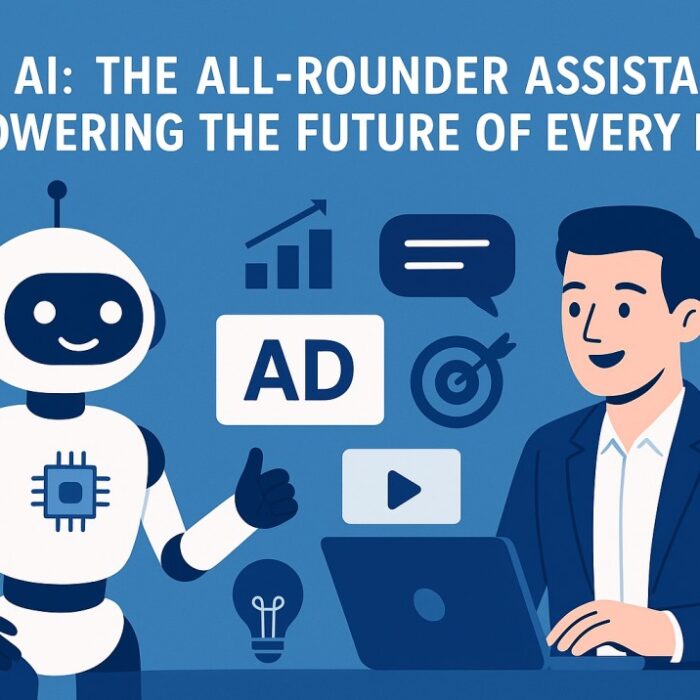
Artificial Intelligence is transforming from a reactive assistant into an active collaborator. Behind this transformation lie two key forces, Prompt Engineering and AI Agents.
While one defines how we communicate with AI, the other defines how AI acts on our behalf.
Together, they form the foundation of intelligent automation, reshaping how humans and machines co-create outcomes.

Prompt engineering is the art and science of crafting effective inputs to guide large language models (LLMs) like GPT-5 toward specific, reliable outputs.
In simpler terms, it’s how we teach AI what to do and how to think.
AI models don’t inherently understand intent; they interpret language statistically. A well-engineered prompt bridges this gap by providing:
When done right, prompt engineering transforms vague human language into structured intelligence that machines can act upon.
The second prompt doesn’t just request, it directs, leading to consistent, brand-aligned outputs.
While prompt engineering makes AI more responsive, AI agents make it autonomous.
An AI agent is a system that perceives, reasons, and acts to achieve goals without constant human input.
Unlike simple chatbots that respond to single queries, agents can:
This turns AI from a “question-answer” machine into a goal-oriented digital partner.
AI agents operate through a core architecture combining four components:
For instance, a marketing AI agent can analyze campaign data, generate insights, write ad copy, and trigger workflows, all autonomously.
Prompt engineering and AI agents are interdependent.
Think of it like this:
Prompt engineering gives the AI agent a compass, while the agent uses it to navigate complex terrains.
Without structured prompts, agents lack direction. Without autonomous agents, prompts remain limited to one-time interactions.
The combined power of prompt engineering and AI agents is being used across industries:
Organizations leveraging both are moving from efficiency to intelligence, scaling output without increasing operational overhead.
Building effective AI agents starts with smart prompting strategies:
Over time, prompt design evolves into meta-prompts, prompts that help the agent write better prompts itself.
This self-improving loop is the next step in agentic intelligence.
As LLMs evolve, prompt engineering is becoming less about crafting individual commands and more about system-level design.
Future AI ecosystems will rely on dynamic prompting, where agents automatically generate and refine their own instructions to optimize outcomes.
In this future:
This is how the next generation of AI systems, powered by reasoning, memory, and autonomy, will redefine productivity.
Prompt engineering taught us how to communicate with machines.
AI agents are teaching machines how to communicate back, intelligently, purposefully, and autonomously.
Together, they form the blueprint for the next era of human-AI collaboration, where creativity meets computation, and innovation meets intent.