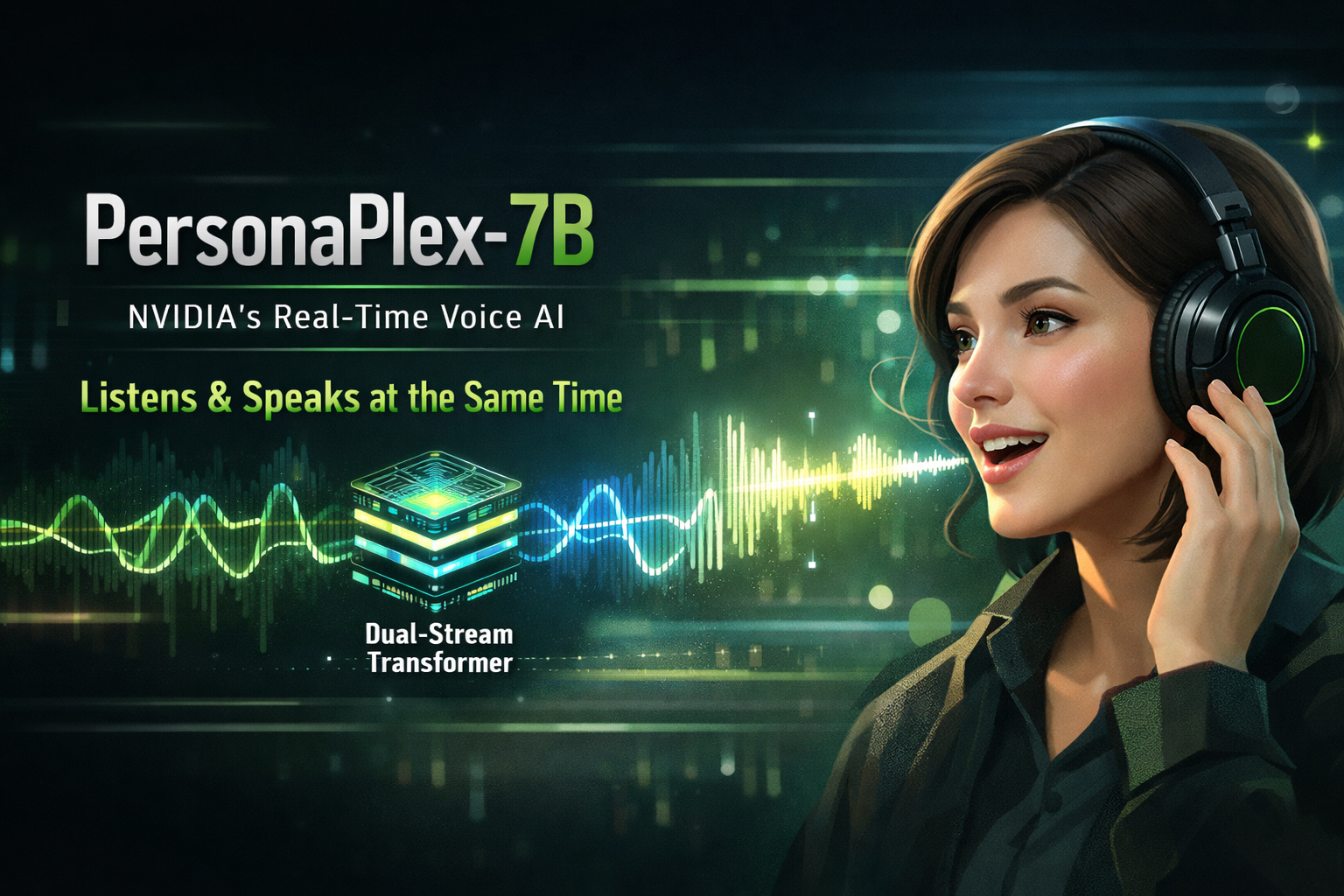
PersonaPlex-7B: How NVIDIA Just Changed the Future of Voice AI
January 24, 2026

For years, Adobe has dominated the image editing ecosystem. Photoshop became synonymous with professional visual editing, shaping how designers, marketers, photographers, and creators think about manipulating images. But in 2025, that long-standing dominance is facing a serious challenge as AI is taking up the course in action.
Higgsfield.ai has quietly released Nano Banana Inpaint, and it is rapidly redefining what AI-powered image editing can be. This is not another text-to-image model, nor a novelty feature layered onto an existing workflow. Nano Banana Inpaint introduces a fundamentally different approach to editing images using artificial intelligence. One that prioritizes precision, context awareness, and structural integrity over random generation.
The result is an editing experience that feels less like prompting a machine and more like collaborating with an intelligent visual editor.
Most AI image tools today rely heavily on prompts. Users describe what they want, hope the model interprets it correctly, and then iterate endlessly when the output misses the mark. Even advanced tools struggle with consistency, especially when modifying existing images rather than generating new ones.
Nano Banana Inpaint changes this paradigm entirely.
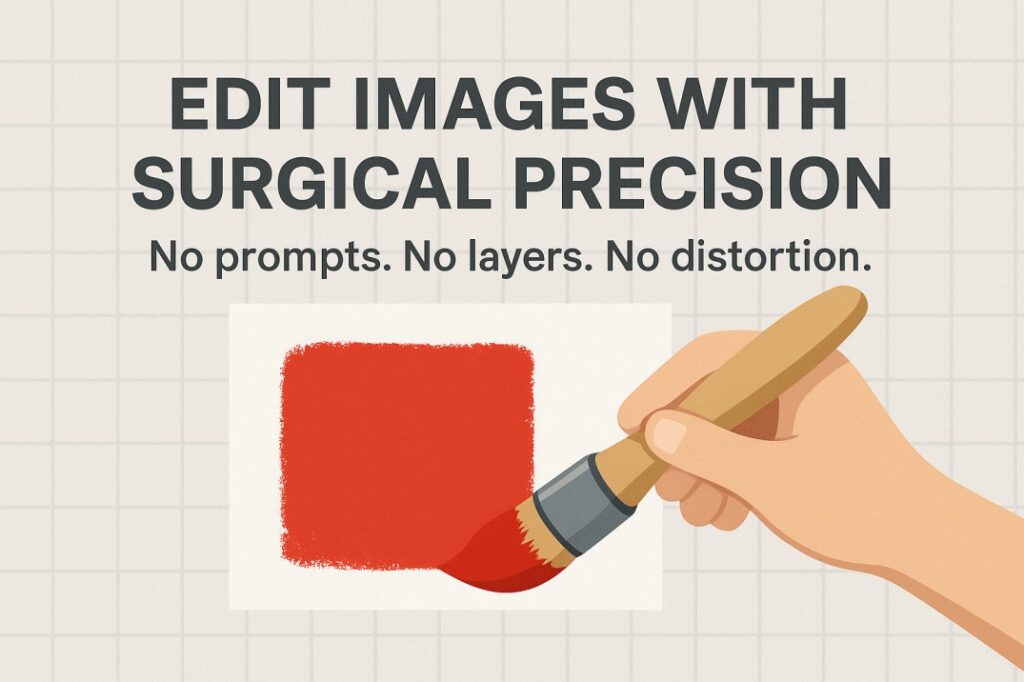
Instead of prompting, users simply paint over the area they want to change. That is it. The model automatically understands what needs to be altered and how to do it while preserving everything else in the image.
There are no layers to manage. No confusing masks. No lengthy instructions. Just direct visual intent translated into high-fidelity edits.
This shift removes friction from the creative process and gives users unprecedented control without requiring technical expertise.
What truly sets Nano Banana Inpaint apart is its deep understanding of context.
The model does not treat the painted area as an isolated patch. It analyzes the entire image to understand geometry, lighting, perspective, material properties, and identity. This means edits blend seamlessly into the original image without introducing distortions or visual inconsistencies.
If you repaint a section of a face, the model preserves facial structure, expression, and identity. If you alter an object in a scene, shadows, reflections, and scale remain intact. If you rewrite text within an image, typography and alignment stay coherent.
This level of contextual reasoning is what transforms Nano Banana Inpaint from a creative toy into a professional-grade editing system.
One of the most common frustrations with AI image editing tools is unintended changes. Modify one element, and suddenly the background shifts. Colors change. Shapes warp. The final result feels unstable and unreliable.
Nano Banana Inpaint eliminates this problem.
Edits are strictly confined to the painted area. Everything outside the mask remains untouched. There is no bleed-through, no unexpected regeneration, and no loss of detail in the surrounding image.
This makes the tool viable for real production workflows where precision is non-negotiable. Designers can confidently make targeted edits without fearing collateral damage to the rest of the composition.
Nano Banana Inpaint is not limited to a single type of modification. It supports a wide range of professional use cases, including:
These edits are not random or approximate. They are structure-preserving and visually coherent, making the output suitable for commercial use.
For marketers, this means faster campaign iterations. For designers, fewer manual adjustments. For content teams, the ability to scale visual production without sacrificing quality.
At the core of this capability is Nano Banana Pro, Higgsfield’s advanced reasoning engine.
Unlike traditional diffusion models that prioritize generative creativity, Nano Banana Pro focuses on understanding relationships within an image. It reasons about spatial structure, material consistency, and visual continuity before making changes.
This is why the edits feel intentional rather than probabilistic. The model is not guessing what might look good. It is calculating what should change and what must remain the same.
This distinction is crucial. It marks a shift from generative AI as an experimental tool to AI as a dependable production partner.
Another key advantage of Nano Banana Inpaint is its compatibility with major visual generation systems.
It works at full power with Veo, Kling, Seedance, and MiniMax. This means teams can integrate Nano Banana Inpaint into existing pipelines without disrupting their current workflows.
Instead of replacing tools, it enhances them. Users can generate visuals using their preferred models and then apply precise, high-control edits using Nano Banana Inpaint.
This interoperability positions Higgsfield not as a closed ecosystem, but as an enabling layer across the broader AI creative stack.
Adobe has invested heavily in AI features, but most of its tools still rely on traditional workflows layered with automation. While powerful, they often require significant expertise, manual intervention, and time.
Nano Banana Inpaint challenges this model by offering:
For many creators, especially those outside traditional design roles, this is transformative. Product managers, marketers, founders, and content strategists can now make professional-grade edits without relying on specialized software or skills.
That shift in accessibility is what makes Nano Banana Inpaint such a disruptive force, and Adobe lacks in there.
Higgsfield is not just competing on technology. It is also competing on accessibility.
With discounts of up to 67 percent off all plans, the company is clearly aiming to drive rapid adoption. This aggressive pricing lowers the barrier for individuals and teams to experiment with and integrate the tool into their workflows.
In a market where premium creative software often comes with steep costs, this strategy makes Nano Banana Inpaint especially attractive to startups, agencies, and independent creators.
The question many are now asking is whether any other platform offers this level of control in 2025.
While several AI image tools excel at generation, few match Nano Banana Inpaint’s precision, reliability, and structural awareness. Most still struggle with localized edits, identity preservation, and unintended distortions.
Nano Banana Inpaint stands out because it does not try to replace human intent with randomness. It amplifies intent through intelligent interpretation.
That difference matters.
Nano Banana Inpaint is more than a feature release. It represents a shift in how we think about editing images with AI.
Instead of prompting and hoping, users act, and the model responds with accuracy. Instead of rebuilding images from scratch, it refines them with surgical precision. Instead of breaking workflows, it integrates seamlessly into them.
If this trajectory continues, 2025 may be remembered as the year AI image editing stopped being experimental and started becoming truly professional.
Adobe still has scale, trust, and an entrenched user base. But for the first time in a long while, it has a real competitor that is redefining the rules.
And Nano Banana Inpaint is just getting started.